Automotive Marketing in Bangladesh: 9 Smart Strategies to Attract More Car Buyers

Afnan Ahmed Mahin
Media Buyer || SEO Expert || Content Writer
Automotive marketing in Bangladesh is no longer just about posting vehicle photos, promoting discounts, or running Facebook ads. Successful dealerships need to reach the right buyers, build credibility, generate qualified enquiries, and turn online interest into actual showroom visits and vehicle sales.
That requires a coordinated approach combining search engine optimization (SEO), Google Ads, social media marketing, compelling vehicle content, and effective lead management.
For car dealerships, reconditioned vehicle sellers, automobile distributors, and automotive businesses, the objective is simple: attract serious buyers, reduce wasted marketing expenditure, and convert more opportunities into customers.
This guide explains nine practical strategies designed for Bangladesh’s changing automotive market.
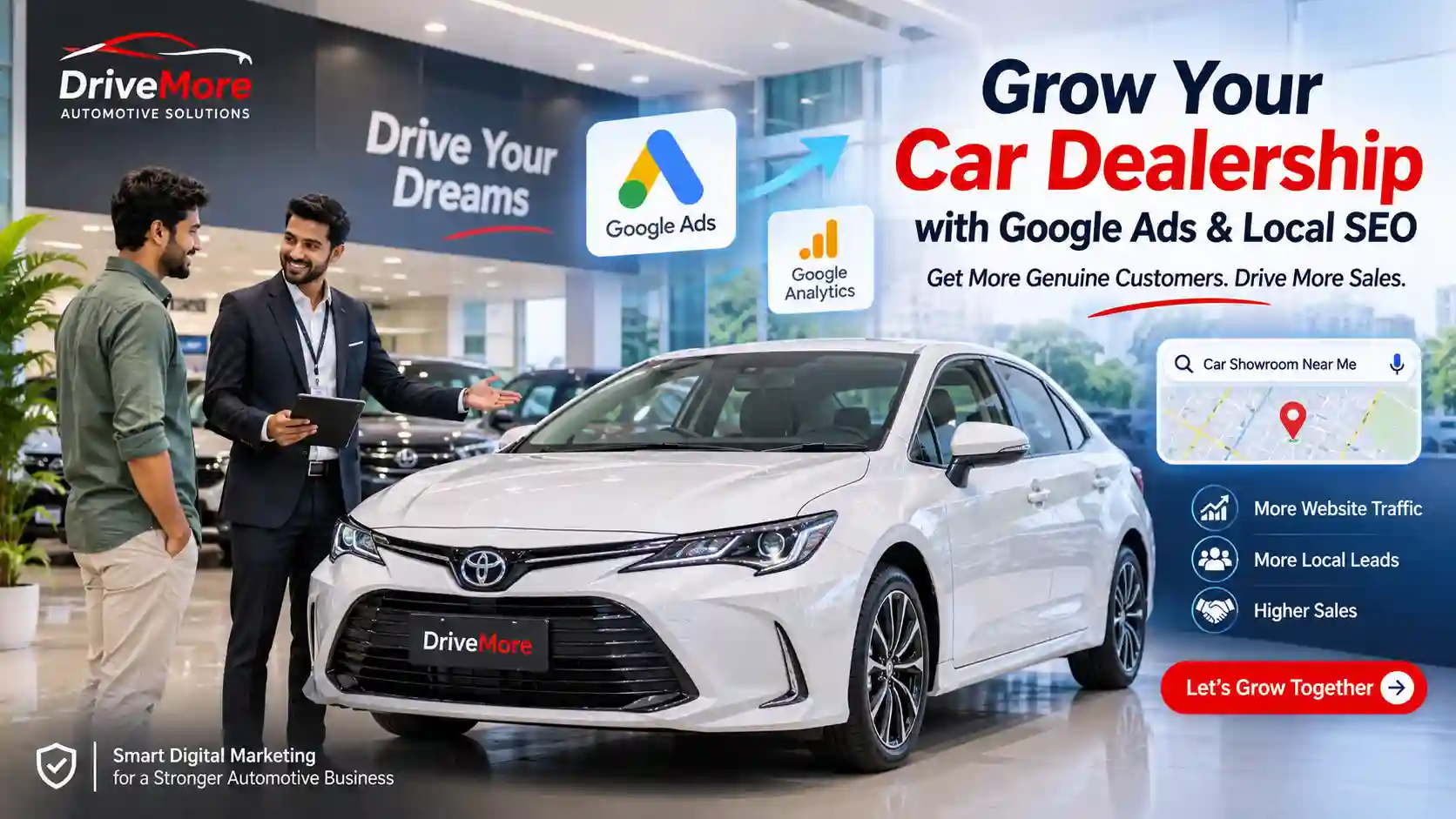
What Is Automotive Marketing?
Automotive marketing is the process of promoting vehicles, dealerships, automotive products, and related services through coordinated digital and traditional marketing channels.
It includes attracting potential buyers, helping them compare available options, building trust, encouraging enquiries or test drives, and supporting the sales process.
Unlike many lower-cost consumer purchases, buying a vehicle often involves significant financial decisions, multiple comparisons, and discussions with family members or business partners.
For automotive businesses in Bangladesh, an effective strategy should therefore address the entire customer journey—from discovering a vehicle online to visiting a showroom, completing a purchase, and returning for after-sales services.
The Automotive Market in Bangladesh: Why Marketing Strategy Matters
Bangladesh’s passenger vehicle market is experiencing considerable pressure.
According to a November 2026 report by The Daily Star, citing Bangladesh Road Transport Authority (BRTA) data, private passenger-car registrations fell from 10,499 in 2024 to 9,387 in 2025. Only 5,458 were registered between January and August 2026.
The report linked weaker demand to economic conditions, rising vehicle prices, currency depreciation, and reduced purchasing power.
Source: The Daily Star — Economic Slowdown Drags Down Car Market
These figures concern private passenger-car registrations, not total automobile sales across every vehicle category. However, they illustrate the commercial challenges facing passenger-car dealers.
When customers become more price-conscious, simply increasing advertising expenditure is rarely the solution. Dealerships must understand buyers’ concerns and communicate value more effectively.
What Influences Vehicle Buyers in Bangladesh?
Several practical considerations can affect purchase decisions:
- Vehicle affordability: Purchase price, financing arrangements, registration expenses, and expected ownership costs.
- Vehicle condition: Buyers of reconditioned cars often want inspection records, mileage information, and documentation.
- Fuel economy: Fuel efficiency and potential maintenance expenses influence long-term affordability.
- Brand reputation: Reliability, spare-parts availability, service support, and resale considerations.
- Dealer credibility: Genuine vehicle photographs, transparent communication, and customer reviews.
- Convenience: Showroom location, appointment availability, and responsive sales representatives.
Automotive companies that address these concerns through their websites, advertisements, and sales conversations can give potential customers more confidence in their decisions.
| Buyer Journey Stage | Customer's Main Question | Appropriate Marketing Activity |
|---|---|---|
| 01 Awareness | Which vehicle would suit my needs? | Educational videos, social content, introductory guide |
| 02 Research | Which models should I compare? | SEO articles, model comparisons, specification pages |
| 03 Consideration | Can I trust this dealership? | Reviews, vehicle documentation, showroom information |
| 04 Enquiry | Is this vehicle available within my budget? | Google Ads, landing pages, calls, WhatsApp |
| 05 Purchase | Can I inspect or test-drive the vehicle? | Appointment scheduling, sales follow-up |
| 06 Ownership | Where can I get reliable support? | Service reminders, customer communication, retention campaigns |
The mistake many dealerships make is running advertisements without building a system for what happens after someone clicks.
A better approach connects marketing, inventory information, customer enquiries, and the sales team’s follow-up process.
9 Effective Automotive Marketing Strategies for Bangladesh
1. Identify Your Most Valuable Vehicle Buyer Segments
Not every potential customer is looking for the same vehicle—or making the same buying decision.
A dealership marketing premium SUVs should not necessarily use the same messaging as a showroom offering entry-level reconditioned sedans.
Start by identifying your most relevant customer segments.
For example:
- First-time car buyers: Interested in affordability, ownership costs, reliability, and guidance.
- Family buyers: Focused on cabin space, safety features, practicality, and comfort.
- Professionals and executives: May prioritize convenience, premium features, and brand preference.
- Business buyers: Interested in commercial suitability, operating costs, and reliability.
- Vehicle upgraders: Often compare new features, resale value, and trade-in possibilities.
Develop separate messaging and landing pages for major buyer groups.
A family-focused advertisement might explain rear-seat space, vehicle condition, and operating costs, while a business-focused campaign could emphasize fleet suitability and total cost of ownership.
Practical recommendation: Examine previous enquiries and completed sales to identify which buyer segments actually generate revenue. Prioritize those segments instead of treating every social media interaction as an equally valuable lead.
2. Invest in Local SEO and Google Business Profile Optimization
Local visibility is essential because many automotive purchases eventually involve a physical showroom visit.
A customer might search for:
- Reconditioned car showroom in Dhaka
- Hybrid car dealer in Bangladesh
- Used car showroom in Uttara
- Toyota car dealer in Chattogram
- SUV showroom near me
Your dealership should be easy to find when relevant buyers search for its products and location.
Optimize Your Google Business Profile
For eligible physical dealerships:
- Use the real, recognizable business name.
- Provide the correct showroom address and contact details.
- Select appropriate business categories.
- Display accurate business hours.
- Upload genuine showroom, inventory, and business photographs.
- Encourage customers to leave authentic reviews.
- Respond professionally to customer feedback.
- Keep relevant business information current.
Google’s Business Profile guidelines specifically address dealership operating hours and require accurate representation of physical business locations.
Avoid creating fake showroom listings or stuffing additional keywords into your business name.
Improve Local Website SEO
Build useful location pages only where your business genuinely operates or serves customers.
A showroom in Uttara could include directions, available inventory, facilities, contact details, and information about arranging a visit.
Local SEO works best when your business profile, website, and actual showroom experience communicate consistent information.
3. Run High-Intent Google Ads Campaigns
Google Ads can help dealerships reach potential customers who are actively researching vehicles or looking for a seller.
However, not every automotive-related search has the same commercial value.
Consider the difference between:
“How does a hybrid engine work?”
and
“Toyota hybrid car showroom in Dhaka.”
The first query is primarily informational. The second suggests stronger dealership-related intent.
Both audiences may eventually become buyers, but they should not necessarily receive the same campaign budget or advertising message.
Organize Campaigns Around Buying Intent
Separate campaigns or ad groups by:
- Vehicle category
- Specific make or model
- New versus reconditioned inventory
- Geographic location
- Commercially relevant search intent
Where appropriate, use relevant negative keywords to reduce unrelated traffic.
Send visitors to a page matching the advertisement rather than automatically directing every click to the homepage.
A campaign promoting an available Toyota Corolla Cross should lead to a page with information about that vehicle, current availability, genuine images, and a clear enquiry option.
Important: Track qualified enquiries, showroom appointments, and sales outcomes—not just clicks.
This is especially relevant when the purchase happens offline after the original advertisement
4. Create Vehicle Landing Pages That Build Buyer Confidence
Many automobile websites showcase attractive cars but leave important questions unanswered.
Potential buyers should not have to message a dealership simply to discover basic information.
An effective vehicle landing page should include:
- Vehicle make, model, and variant
- Model year and relevant specifications
- Genuine photographs or videos
- Current price or a clear pricing enquiry option
- Availability status
- Mileage and condition information where applicable
- Inspection and documentation details, where available
- Financing information, if offered
- Showroom location
- Clear enquiry and appointment options
For reconditioned vehicles, avoid vague claims such as “100% perfect condition” unless supported by a defensible inspection standard.
Transparent information helps buyers evaluate whether the vehicle meets their requirements before contacting your sales team.
Make the Enquiry Process Simple
Use a short form that captures essential information without asking for unnecessary personal details.
For example:
- Name
- Phone number
- Interested vehicle
- Preferred contact method
- Preferred appointment date, if applicable
Provide visible call and WhatsApp options for customers who prefer direct communication.
A useful landing page does not need dozens of buttons. It needs the right information and an obvious next step.
5. Use Video and Social Media to Demonstrate Real Vehicle Value
Vehicle buyers often want to see more than a polished photograph.
They may want to inspect the interior, understand the driving experience, hear the engine, and evaluate the practical features of a specific model.
Video can communicate these details more effectively than static advertising alone.
Useful content ideas include:
- Exterior and interior walkarounds
- Vehicle feature demonstrations
- Honest model comparisons
- Fuel-efficiency explanations
- Showroom tours
- Vehicle inspection processes
- Customer experiences shared with permission
- Maintenance and ownership guidance
Use Facebook and Instagram to reach relevant audiences, while YouTube can support more detailed reviews and comparisons.
Short-form videos can introduce a vehicle quickly. Longer videos can help buyers answer complex questions before visiting.
A strong automotive content strategy should educate customers, not simply repeat “best price” or “limited offer” in every post.
For paid campaigns, test different creative angles and evaluate their contribution to meaningful enquiries rather than judging success by views alone.
6. Prioritize Qualified Leads Over Cheap Leads
A campaign generating 300 enquiries is not automatically better than one generating 60.
The important question is how many enquiries represent genuine purchasing opportunities.
A qualified lead generally has a relevant vehicle requirement, an achievable budget, a realistic purchase timeline, and a willingness to take the next step.
Dealerships can establish a simple lead qualification process.
For example, assess:
- Vehicle interest: What make, model, or category does the person want?
- Budget alignment: Does their expected budget match available inventory?
- Purchase timeline: Are they planning to buy soon or conducting early research?
- Location: Can they realistically visit or purchase from the dealership?
- Next action: Have they requested an inspection, appointment, or financing discussion?
Do not reject early-stage buyers automatically. Instead, categorize them for appropriate follow-up.
A serious buyer researching a vehicle for next month deserves a different communication approach from someone casually browsing without an immediate purchase plan.
7. Build a Reliable WhatsApp and CRM Follow-Up System
Even an excellent advertising campaign can underperform if the sales team responds slowly or loses track of enquiries.
A potential buyer might contact several dealerships on the same day.
A clear, helpful response can make a significant difference to whether the conversation continues.
Create a consistent enquiry management workflow:
- Capture enquiries from approved website forms, advertisements, calls, and messaging channels.
- Assign each enquiry to a responsible sales representative.
- Record vehicle interest and purchase requirements.
- Respond during business hours as promptly as operationally possible.
- Share relevant inventory information.
- Offer an appropriate showroom appointment.
- Record the outcome and schedule any agreed follow-up.
- Update the CRM after showroom visits and purchases.
WhatsApp can support convenient communication, but businesses should respect user consent and applicable messaging policies.
Avoid repeatedly contacting customers who have not agreed to receive promotional messages.
A CRM does not need to be expensive to be useful. Even a well-maintained system with clear ownership, lead stages, and follow-up responsibilities can improve operational visibility.
8. Turn Existing Buyers Into Long-Term Customers
Automotive marketing should not stop once a vehicle is sold.
Existing customers may return for service support, maintenance, accessories, trade-ins, or future vehicle purchases.
They may also recommend the dealership to friends and family.
Useful retention activities include:
- Post-purchase customer support
- Service reminders where relevant
- Warranty and maintenance information
- Customer satisfaction follow-ups
- Referral programmes with transparent terms
- Relevant updates about vehicle services
- Helpful ownership content
The goal is not to overwhelm customers with promotional messages.
Instead, maintain a useful relationship that makes the dealership easier to remember and trust.
Retention strategies can also reveal problems in the ownership experience that advertising reports alone would never identify.
9. Connect Marketing Performance to Actual Vehicle Sales
The most important improvement many automotive businesses can make is connecting advertising data with real sales outcomes. Website traffic, impressions, and form submissions are useful indicators, but none is equivalent to a vehicle sale.
An automotive dealership should ideally measure progress through several stages:
Ad impression → Website visit → Enquiry → Qualified lead → Showroom appointment → Completed visit → Vehicle sale
Use analytics and customer records to understand where potential buyers are dropping out.For example, if many qualified leads book appointments but very few attend, investigate scheduling, reminders, location convenience, and sales communication.
If showroom visits are strong but sales remain weak, examine inventory suitability, pricing transparency, sales experience, and other commercial factors before increasing advertising spend.
Google supports enhanced conversions for leads, which can help connect qualifying offline customer actions with previous advertising interactions when implemented appropriately.
Use privacy-conscious data collection, consent procedures, and accurate CRM record.
Which Automotive Marketing Channels Should You Prioritize?
The best channel depends on the business model, target buyer, available inventory, and marketing objective.
| Marketing Channel | Primary Strength | Useful Success Metric |
|---|---|---|
| 01 Google Search Ads | Capture active purchase-related searches | Cost per qualified enquiry |
| 02 Local SEO | Improve visibility around real showroom locations | Calls and qualified local enquiries |
| 03 Organic SEO | Help buyers research vehicles and comparisons | Relevant organic leads |
| 04 Facebook and Instagram Ads | Reach audiences with vehicle-focused content | Qualified leads and appointments |
| 05 YouTube | Explain vehicles and establish credibility | Engaged viewers and assisted enquiries |
| 06 WhatsApp and CRM | Continue conversations with interested buyers | Appointment and follow-up conversion rates |
| 07 Retention Marketing | Support existing customers and referrals | Repeat business and referred customers |
Most dealerships should not invest equally in every channel from the beginning.
Start with the channels that match your existing business objectives and expand after establishing reliable measurement.
How to Measure Automotive Marketing ROI
A useful measurement framework should distinguish advertising efficiency from actual business performance.
Track these core metrics:
| KPI | Calculation | What It Helps Explain |
|---|---|---|
| 01 Cost per Lead (CPL) | Advertising spend ÷ Total leads | Cost of generating enquiries |
| 02 Cost per Qualified Lead | Advertising spend ÷ Qualified leads | Cost of reaching relevant prospects |
| 03 Appointment Booking Rate | Booked appointments ÷ Qualified leads × 100 | How often relevant leads progress |
| 04 Showroom Attendance Rate | Completed visits ÷ Booked appointments × 100 | How often appointments become visits |
| 05 Visit-to-Sale Rate | Vehicle sales ÷ Completed visits × 100 | How effectively showroom visits convert |
| 06 Marketing Cost per Sale | Attributable marketing expenditure ÷ Attributed sales | Marketing expenditure associated with each sale |
Illustrative Example: Why Lead Quality Matters
Suppose a dealership spends BDT 60,000 on advertising.
Campaign A produces 200 enquiries, of which 20 are qualified and two lead to vehicle sales.
Campaign B produces 100 enquiries, of which 35 are qualified and five lead to vehicle sales.
| Metric | Campaign A | Campaign B |
|---|---|---|
| Advertising spend | BDT 60,000 | BDT 60,000 |
| Total enquiries | 200 | 100 |
| Cost per lead | BDT 300 | BDT 600 |
| Qualified leads | 20 | 35 |
| Cost per qualified lead | BDT 3,000 | Approx. BDT 1,714 |
| Attributed vehicle sales | 2 | 5 |
| Advertising cost per sale | BDT 30,000 | BDT 12,000 |
These are hypothetical figures for illustration, not actual Octave Marketers campaign results.
Campaign B appears more expensive if judged by cost per lead alone. However, it generates more qualified opportunities and more attributed sales from the same advertising budget.
Actual profitability must also consider vehicle margins, operating expenses, attribution accuracy, and other relevant costs.
A Practical 90-Day Automotive Marketing Action Plan
For an automotive business starting with an inconsistent marketing operation, a phased implementation plan can help establish priorities.
Days 1–30: Audit and Build the Foundation
- Review the existing website, vehicle pages, and showroom information.
- Audit Google Business Profile accuracy.
- Analyze customer enquiries and sales records.
- Identify high-priority vehicle categories.
- Review current advertisements and targeting.
- Set up essential analytics and conversion tracking.
- Establish clear lead qualification and follow-up responsibilities.
Primary outcome: Better visibility into existing marketing weaknesses and lost sales opportunities.
Days 31–60: Launch and Improve Campaigns
- Develop relevant vehicle-specific landing pages.
- Launch focused Google Ads campaigns.
- Test vehicle videos and social media advertisements.
- Publish useful automotive SEO content.
- Improve enquiry forms and appointment scheduling.
- Introduce a consistent CRM follow-up process.
- Test campaign messages and creative variations.
Primary outcome: More relevant enquiries and a better customer experience.
Days 61–90: Optimize for Business Results
- Compare campaigns by qualified leads.
- Review showroom attendance and sales outcomes.
- Improve underperforming landing pages.
- Reallocate budgets based on reliable results.
- Strengthen effective creative messages.
- Identify recurring customer objections.
- Improve after-sales communication and referral opportunities.
Primary outcome: Better-informed marketing decisions with a stronger connection to dealership performance.
Common Automotive Marketing Mistakes to Avoid
Even businesses investing consistently in advertising can lose opportunities because of avoidable mistakes.
Promoting unavailable inventory: Outdated vehicle listings frustrate buyers and create unnecessary enquiries.
Using identical campaigns for every vehicle: Different models and buyer segments require different messaging.
Ignoring the sales process: Marketing cannot compensate indefinitely for poor responses or unreliable showroom information.
Measuring only low-cost leads: Cheap, irrelevant enquiries can waste valuable sales-team capacity.
Neglecting mobile usability: Slow pages and difficult contact forms can disrupt the enquiry process.
Making unsupported claims: Exaggerated condition, price, mileage, or financing statements can damage trust.
Fixing these operational problems may be more valuable than simply increasing the advertising budget.
Why Choose Octave Marketers for Automotive Marketing?
Automotive businesses need more than isolated advertisements. They need a coordinated strategy that connects customer acquisition, website experience, tracking, and sales opportunities.
Octave Marketers provides digital marketing services designed to help businesses improve online visibility and marketing performance.
For automotive dealerships and related businesses, relevant service areas include:
- Automotive SEO and Local SEO: Help relevant buyers discover your business and vehicle information.
- Google Ads and Paid Social Media: Develop targeted campaigns around vehicle categories and commercial intent.
- Website and Landing Page Optimization: Improve the experience between advertisement clicks and customer enquiries.
- GA4, GTM, and Conversion Tracking: Provide better visibility into how prospective customers engage with campaigns.
- Conversion Rate Optimization: Identify avoidable friction in enquiry and appointment processes.
- Marketing Strategy and Analytics: Align channel decisions with measurable commercial objectives.
Rather than focusing only on impressions or clicks, the aim is to build a marketing process that supports more relevant customer conversations and better-informed growth decisions.
Explore Octave Marketers’ automotive digital marketing services to see how an industry-focused approach could support your dealership.
Final Thoughts: Build a Marketing System, Not Just More Advertisements
Effective automotive marketing begins with understanding the buyer.
Bangladeshi dealerships need accurate vehicle information, credible online visibility, relevant advertising, responsive sales teams, and reliable performance measurement.
The strongest approach connects every stage of the journey, from early research to showroom appointments, completed sales, and after-sales relationships.
Start by identifying the weakest stage in your current process. Improve that stage, measure the results, and expand what works.
Frequently Asked Questions About Automotive Marketing
1. Is Automotive Marketing Important for Car Dealerships in Bangladesh?
Yes. Automotive marketing helps dealerships connect with potential buyers, communicate vehicle information, strengthen credibility, and generate relevant enquiries. It is particularly valuable when customers compare multiple vehicles and dealerships before making an expensive purchase. The most effective approach connects digital visibility with a reliable offline sales process.
2. Can Automotive Marketing Help Generate More Qualified Leads?
Yes. Automotive marketing can help generate more relevant leads through targeted campaigns, informative landing pages, local search visibility, and effective lead qualification. However, actual results depend on factors such as inventory, demand, pricing, advertising quality, and sales follow-up. Generating more enquiries does not automatically mean generating more vehicle sales.
3. Is Google Ads Effective for Automotive Marketing in Bangladesh?
Yes. Google Ads can be effective when campaigns target commercially relevant searches and direct users to suitable vehicle or dealership pages. Advertisers should monitor qualified leads, appointment bookings, and actual sales outcomes rather than relying exclusively on traffic or cost-per-click statistics. Campaign performance will vary according to competition and customer demand.
4. Can Facebook and Instagram Ads Increase Car Sales?
Yes. Facebook and Instagram advertising can support vehicle discovery, enquiry generation, and audience engagement when used with relevant content and appropriate targeting. However, advertising alone does not guarantee completed purchases. Accurate vehicle information, available inventory, buyer qualification, and sales-team responsiveness remain essential for turning advertising interest into sales.
5. Is Local SEO Necessary for Automotive Dealerships?
Yes. Local SEO can help eligible dealerships improve their visibility for location-specific searches and make it easier for customers to find accurate showroom information. A complete Google Business Profile, useful location pages, genuine reviews, and consistent business details can support local discovery and customer confidence.
6. Can Automotive SEO Reduce Dependence on Paid Advertising?
Yes. A well-developed automotive SEO strategy can attract relevant organic visitors over time and create an additional source of enquiries. However, SEO requires sustained effort and cannot guarantee rankings or immediate results. Many dealerships benefit from combining organic visibility with carefully managed paid campaigns.
7. Is WhatsApp Marketing Useful for Car Dealerships?
Yes. WhatsApp can help dealerships answer customer questions, share relevant vehicle details, arrange showroom appointments, and continue requested conversations. Businesses should obtain appropriate permission for promotional messaging, protect customer information, and avoid excessive follow-ups. A CRM can help keep those conversations organized.
8. Can Small Car Dealerships Compete With Larger Automotive Brands Online?
Yes. Smaller dealerships can compete for relevant local searches and specialized buyer segments by providing accurate inventory information, responsive service, useful content, and targeted advertising. They may not have the same overall budget as larger competitors, but a focused strategy can help them reach customers whose needs match their offerings.
9. Should Automotive Businesses Hire a Digital Marketing Agency?
Yes, when an agency can provide capabilities, specialist knowledge, or execution capacity that the business needs. A suitable partner should understand customer acquisition, campaign measurement, dealership enquiries, and the importance of sales follow-up. Businesses should evaluate strategic fit, transparency, relevant expertise, and realistic performance expectations before making a decision.